New Delhi: Myanmar President Min Aung Hlaing's ongoing India trip could open a major opportunity for New Delhi to harness rare earths from the neighbouring Southeast Asian country which to date are being extracted by China.Myanmar's Kachin and Shan states have massive deposits of rare earth elements including dysprosium and terbium used for permanent magnets for EVs, wind turbines, and defence items. The issue of India harnessing rare earths from Myanmar will figure prominently on the agenda of the meeting between PM Narendra Modi and the visiting President here on Monday. The visiting leader will also address a business forum here.Also Read: NSA Ajit Doval calls on Myanmar President on his maiden visitCurrently, Myanmar's northern neighbour China has been extracting rare earths from the Kachin state, but the visit has provided an opportunity to push its initiative, according to a person familiar with the issue. The Myanmar Army has stepped up its offensive in the border areas which have rare earth deposits, but rebel groups have major influence there.India-Myanmar bilateral trade has expanded over the years, with annual trade growing 23% to touch $2.15 billion in FY25-Myanmar exports totalled $1.53 billion and Indian exports were at $614.3 million. In particular, pulses exports, comprising about 77% of Myanmar's exports to India, increased by 29% in FY25. India is the fourth-largest trading partner of Myanmar.Also Read: Myanmar President Aung Hlaing begins India visitThe rupee-kyat settlement has also been functional since January 2024. The scope for further expanding bilateral trade is significant, particularly if Myanmar could increase fuel and pharmaceutical imports from India under the rupee-kyat mechanism and against its beans and pulses exports in rupees. Indian-made medicines are widely used in Myanmar due to their affordability and quality.As per the Government of Myanmar's statistics, India is presently the eleventh-largest investor with an approved investment of US$782.821 million by 39 Indian enterprises, out of the total estimated investments of US$96.05 billion from 53 countries (as on 31st March, 2025).
from Economic Times https://ift.tt/gsE1ud3
via IFTTT

Sunday, May 31, 2026
Localisation lens on 500 most-imported items
New Delhi: The government is examining 500-odd heavily imported products including machinery, fertilisers, chemicals, cotton staple fibre, plastics, silicon wafers and carbon fibres, to identify localisation opportunities and reduce dependence on overseas supply. The commerce and industry ministry is collating data from different ministries on import dependence, estimated time and capital investment required to achieve commercially viable domestic manufacturing capability, and national strategic relevance of these products, officials privy to the development said.The idea is to reduce the country's import bill and build supply resilience amid the ongoing West Asia crisis.The Department for Promotion of Industry and Internal Trade (DPIIT) is "analysing data such as production capacity and bottlenecks faced by industry," one of the officials said.131428063The department has sought information such as the extent to which domestic demand for the product is met through imports, indicating vulnerability to external supply and the need for localisation, and the importance of the product in ensuring continuity, resilience, and stability of domestic manufacturing and essential downstream sectors.The exercise also covers harvester-threshers, parts of turbo jets and certain graphite, officials said.DPIIT is likely to shortlist around 100 items where the imports are high but the country has capacity to produce them locally, another person aware of the development said.High import dependence means where 60% or more of the domestic demand for the product is met through imports while medium is where imports are 30-60%. "Electronics and chemicals are two key sectors where imports are huge but the potential to export is also significant," another official said.India's goods import bill stood at $774.98 billion in FY26, led by oil at $174 billion, electronics at $116.17 billion, and gold at $72 billion. The country also imported organic and inorganic chemicals worth $28 billion last fiscal.Makeup preparations, dishwashers, industrial valves and certain silicon wafers also figure in the list of the products whose imports are being studied.The exercise comes after Prime Minister Narendra Modi urged citizens to help preserve foreign exchange and contain the country's rising import bill amid the ongoing conflict in West Asia.
from Economic Times https://ift.tt/TI79HqM
via IFTTT
from Economic Times https://ift.tt/TI79HqM
via IFTTT
Saturday, May 30, 2026
Friday, May 29, 2026
Molecule glue drugs shake up cancer care
One of the biggest advances in pancreatic cancer in decades came out of a crazy idea born in a Harvard University lab.Chemical biologist Gregory Verdine believed you could fight disease-causing proteins hidden inside cells by chemically gluing them to something else in the body and smothering them."Everybody told us this is crazy, that it would never work," he recalls.Revolution Medicines, which bought one of Verdine's companies in 2018, recently announced that one of its drugs doubled the typical survival time for patients with aggressive forms of the disease, from 6.7 months to 13.2 months. The full results from the company's final-stage trial are expected to be the star of the show at the annual confab of cancer doctors in Chicago this weekend.Spurred by the success of RevMed, numerous companies are now racing to develop similar drugs, dubbed "molecular glues", which can be used to treat a variety of ailments. And investors and pharmaceutical companies with deep pockets are chasing after them, creating one of the hottest corners of dealmaking in the industry.Also read | India's out-of-pocket healthcare spending drops significantly, govt data showsIt's not unusual for exciting new drugs to spark surges in stock prices and dealmaking frenzy. But molecular glue is a particularly complicated science, and the startups pursuing technologies similar to RevMed are mostly in early stages of testing. Their medicines won't be ready for years, if ever.That hasn't stopped big drugmakers such as Novartis, Roche Holding and Eli Lilly from inking research pacts with glue developers that could pay out billions of dollars in milestones.The boom has been especially lucrative for Monte Rosa Therapeutics. Over the past three years, the Boston-based biotech firm has signed three agreements that could be worth over $10 billion to develop molecular glue drugs with both Novartis and Roche.The company, which trades under the stock ticker GLUE, has seen its shares surge nearly 400% over the past year. It's preparing to start mid-stage trials for multiple drugs by the end of this year."The run-up in the share price is justified based on what we've seen so far," says Robert Driscoll, an analyst at Wedbush. Gains are "due to the success of their drugs rather than kind of exuberance around the glue technology as a whole", he says.Science of GlueMolecular glues work in a fundamentally different way from other oral medicines. Most pills - like Prozac for depression or Lipitor for cholesterol - are tiny chemicals that squeeze into a pocket inside a much larger protein to gum up its functioning. But many proteins have few obvious pockets, including key cancer-causing proteins.In fact, about 80% of all proteins in the body are what scientists refer to as "undruggable", meaning they can't be targeted with traditional drug technologies.RevMed's daraxonrasib cleverly circumvents this problem by acting as a molecular stickum. Once inside the body it binds to a healthy protein on one side and then draws in the bad protein to stick to the other side. The healthy protein helps block the bad protein and turn off its signalling.Competitors Line UpMultiple companies are chasing RevMed's lead in pancreatic cancer despite the long odds. San Diego-based Erasca is in early stages of testing a drug it says is more potent than daraxonrasib. Japanese drugmaker Astellas Pharma has begun final-stage trials of a degrader that may help a subset of pancreatic and lung cancer patients.Molecular glues are also being developed as alternatives to injectable drugs used to treat autoimmune and skin disorders. Shares of Kymera Therapeutics have soared more than 180% in the past year thanks to promising early trial results. The company is developing a once-daily pill it hopes will one day compete with Sanofi and Regeneron Pharmaceuticals' Dupixent, one of the world's bestselling drugs."The technology allows you to go after things that would have been almost impossible" to do previously with pills, says Nello Mainolfi, Kymera's founder and CEO.With few effective options for pancreatic cancer, analysts expect RevMed's daraxonrasib to become an enormous bestseller for the company.Prospects for daraxonrasib and speculation about a potential takeout deal have inflated RevMed's market cap to nearly $33 billion. That's a lofty figure for a drugmaker with no approved medicines.The company is preparing to file for US approval soon, and the FDA has promised to give the drug an ultrafast review. It's projected to reach $7 billion in sales a year by 2032, according to the average of estimates compiled by Bloomberg.
from Economic Times https://ift.tt/UFsATxw
via IFTTT
from Economic Times https://ift.tt/UFsATxw
via IFTTT
Delhi HC upholds TRAI’s 12-minute ad cap
The Delhi High Court on Friday dismissed a batch of petitions filed by television broadcasters in 2013 challenging the Telecom Regulatory Authority of India’s (TRAI) 12-minute-per-clock-hour cap on television advertisements, bringing closure to a legal battle that had remained pending for nearly 13 years.The ruling is expected to impact television broadcasters, particularly free-to-air channels that rely heavily on advertising revenue to sustain operations, as the dismissal of petitions clears the way for enforcement of advertising limits that had remained effectively stayed for years.A division bench of Justice Anil Kshetarpal and Justice Amit Mahajan held that TRAI acted within its statutory authority in prescribing limits on television advertisements to protect consumer interests and improve the quality of viewing experience.Also read | Ad slowdown dulls impact of HC relief on TV landing page revenuesThe petitions, filed by a broad set of broadcasters including general entertainment channels (GECs), news broadcasters and regional television networks, had challenged Rule 7(11) of the Cable Television Network Rules, 1994, and Regulation 3 of TRAI’s Standards of Quality of Service (Duration of Advertisements in Television Channels) Regulations, 2012, as amended in 2013.The regulations prescribe a cap of 12 minutes of advertisements in a clock hour, including up to 10 minutes of commercial advertisements and two minutes of self-promotional content.Broadcasters that had secured interim relief from the Delhi High Court had not been implementing the 12-minute cap, with the court restraining TRAI from taking coercive action pending adjudication of the matter.In November 2025, TRAI issued show-cause notices to major television broadcasters over alleged violations of the 12-minute advertising cap per clock hour and moved the Delhi High Court seeking vacation of the interim protection.Broadcasters, including entities such as 9X Media, B4U Broadband, Sun TV Network, NDTV Lifestyle, Raj Television and the News Broadcasters and Digital Association (NBDA), argued that the restriction violated their rights under Articles 14 and 19 of the Constitution.Also read | In FY26, 97% of violative ads were on digital platforms, 4/5ths of them on Meta: AsciThey contended that advertising revenue was critical to sustaining operations, particularly for free-to-air and news channels with limited subscription income, and that the cap amounted to an unreasonable restriction on commercial speech.The broadcasters also argued that television channels, especially free-to-air networks, depend heavily on advertising revenue for survival and that restrictions on ad inventory could adversely affect their financial viability.Rejecting the arguments, the court held that television differs fundamentally from print media because viewers cannot skip advertisements inserted during programmes, making excessive commercial interruptions a legitimate concern for regulators.The bench drew a distinction between print and broadcast media, observing that newspapers rely on privately owned resources such as printing presses, paper and distribution networks and are governed through registration and professional standards rather than pre-licensing of editorial operations.In contrast, television broadcasting uses airwaves and spectrum, which the court described as a scarce public resource that must be utilised to promote public good. Given the limited nature of spectrum, the State is empowered to impose licensing and authorisation requirements on broadcasters and regulate access to it.“Accordingly, once broadcasters avail themselves of the privilege of utilising public spectrum under statutory licence, they cannot disclaim the corresponding obligation to adhere to conditions designed to regulate its use in the public interest,” the court said.The court also rejected the contention that TRAI lacked jurisdiction to regulate advertisement duration, ruling that the regulator’s mandate under the TRAI Act includes setting standards for quality of service and protecting viewer interests.The court said regulating advertisement duration was a legitimate quality-of-service measure aimed at preventing excessive commercial interruptions and ensuring a more balanced viewing experience for consumers.
from Economic Times https://ift.tt/iZCEzyT
via IFTTT
from Economic Times https://ift.tt/iZCEzyT
via IFTTT
Thursday, May 28, 2026
India, China step up border dialogue
New Delhi: Senior officials of India and China discussed delimitation, border management, mechanism building and cross-border cooperation at a meeting on Wednesday in Beijing. Both sides also decided to prepare for National Security Advisor Ajit Doval's upcoming visit to China.During the 35th meeting of the working mechanism for consultation and coordination on India-China border affairs, the Indian side stressed on an early meeting of the next expert level mechanism on trans-border rivers.The two sides also agreed to work together to make "substantive preparation" for the next meeting of special representatives (SRs) which would not only focus on border issues but also other geopolitical matters including regional issues. The meeting-if held prior to Chinese President Xi Jinping's India trip for the September 12-13 Brics Summit- will help to prepare for a possible meeting between Prime Minister Narendra Modi and Xi on the sidelines of the summit.Also read | Billionaire's FOMO: Ultra-rich pouring money into AI stack"The discussions were constructive and forward looking," the Ministry of External Affairs said in a statement. "The two sides reviewed the situation in the border areas. They expressed satisfaction with the progress made in maintaining peace and tranquility in the border areas, which has enabled progress towards gradual normalisation of bilateral relations."Both sides also decided to maintain regular exchanges and contacts at the diplomatic and military levels through mechanisms including those agreed upon as part of outcomes of the 24th special representative talks in New Delhi in August last year. That meeting between Doval and Chinese foreign minister Wang Yi produced a number of outcomes to maintain peace along the border.Also read | A blueprint for West Bengal’s evolution from an entrepot to a production hubIndia and China initiated several measures in the last more than a year to rebuild bilateral ties that came under severe strain following the deadly Galwan Valley clashes in early 2020 and the subsequent military face-off for more than four years.Several direct flights have been resumed between the two countries as well as the Kailash Mansarovar Yatra as confidence building measures. There has been renewed interest from the Indian business community to expand their commercial ties even as the country's trade deficit continues to widen.
from Economic Times https://ift.tt/bQY1SVO
via IFTTT
from Economic Times https://ift.tt/bQY1SVO
via IFTTT
Netanyahu Orders Israel Army To Take Control Of 70% Of Gaza Strip
Israeli Prime Minister Benjamin Netanyahu said Thursday he had ordered the country's military to take control of 70 per cent of the Gaza Strip, in defiance of the terms of a fragile ceasefire that took effect in October.
"We are currently squeezing Hamas. We now control 60 per cent of the territory in the strip," he said at a conference in an occupied West Bank settlement, according to a video aired by Israel's Channel 12 network.
He said the military had controlled 50 per cent of Gaza under the terms of the ceasefire, adding: "My directive is to move to... 70 percent".
"We're squeezing them from all (sides). We'll deal with what's left afterwards."
The first phase of the truce saw the last hostages seized in Hamas's October 7, 2023 attacks on Israel, which triggered the war in Gaza, released in exchange for Palestinians detained by Israel.
The transition to the second phase, which was supposed to involve Hamas's disarmament and a gradual withdrawal of the Israeli army, has been stalled for months.
Under the terms of the ceasefire, Israeli forces were to pull back behind a so-called "yellow line", a demarcation between the area under Hamas control and that held by the Israeli army.
Netanyahu announced on May 15 that the Israeli army had expanded its grip on the Gaza Strip.
"There were those who said: get out, get out. We did not get out. Today we control... how much? 60 per cent. Tomorrow we shall see," he said at the time.
Gaza remains gripped by daily violence, with both the Israeli military and Hamas accusing one another of violating the truce in effect since October 10.
Israel has killed more than 900 people since the ceasefire, according to Gaza's health ministry, which operates under Hamas authority and whose figures are considered reliable by the United Nations.
Israel said on Wednesday it had killed the new head of Hamas's armed wing in Gaza, Mohammed Odeh, after killing his predecessor earlier this month.
Since Hamas's October 2023 attack, Israel has systematically targeted the group's leaders, both in Gaza and across the region.
Odeh is the fourth head of the Ezzedine Al-Qassam Brigades that Israel says it has killed since the start of the Gaza war.
On Wednesday, Israeli Defence Minister Israel Katz repeated Israel's goal of ending Hamas's rule over the Palestinian territory and alluded to a plan for the forced displacement of its residents.
"The plan for voluntary migration from Gaza will also be implemented -- everything will be done at the right time and in the right way," he said.
(Except for the headline, this story has not been edited by NDTV staff and is published from a syndicated feed.)
from NDTV News- Special https://ift.tt/x5Zqhrv
via IFTTT
Wednesday, May 27, 2026
Indian Startup's Experimental Balloon Platform Rises 25 km Above Earth
A massive experimental balloon gently flew from the Indira Gandhi Stadium in Vijayawada, Andhra Pradesh. It was part of India's private space sector's leap into the space domain, as a startup demonstrated how special high altitude balloons can transform communications, surveillance and scientific research.
Red Balloon Aerospace, a Hyderabad-based company founded in 2025, has successfully launched what it calls India's first indigenous private super-pressure balloon carrying commercial payloads. The mission, named SANA, marks a significant milestone not just for the company but for India's growing ambition in the emerging near-space economy.
The company's VISTA platform rose to about 25 kilometres above Earth, a region far above commercial aircraft but well below satellites. This Stratospheric Zone, between roughly 20 and 50 kilometres, has long remained underutilised globally despite offering unique advantages of persistent observation and lower costs.
India is no stranger to balloon-based science. Government institutions such as the Tata Institute of Fundamental Research and the Indian Institute of Astrophysics have been using high-altitude balloons for decades, especially for astrophysics experiments and atmospheric studies. Their work has built a strong scientific foundation. What makes this moment different is that a private startup is now translating that legacy into commercial applications, moving swiftly to build an industry around near-space platforms.
Red Balloon Aerospace has achieved operational commercial flight within just eight months of its founding. This rapid development shows how private enterprise is accelerating innovation and deployment speed in sectors that were once dominated by government programs.
Mission SANA
Mission SANA carried payloads from seven national and international partners. These included biological experiments, propulsion demonstrations, onboard computing systems, earth observation sensors and navigation validation technologies. According to the company, all payload missions were completed, demonstrating that Indian platforms can meet global commercial standards.
Dr C V S Kiran, Co-founder and Chief Executive Officer, said the mission is only the beginning of a broader effort to build a near-space ecosystem.
"VISTA validates our core near-space platform technology, and this is only the beginning. Our advantage is execution speed, enabling us to design, test and deploy indigenous stratospheric platforms at a pace that demonstrates India's capability to compete globally in emerging space sectors," he added.
He said this mission placed India among five nations globally with indigenous stratospheric hydrogen balloon capability, alongside the United States, France, Japan, and China
Hydrogen is much cheaper compared to Helium that is also used in high altitude balloons. However, hydrogen is risky to handle as it is highly flammable.
The technology behind VISTA sets it apart from conventional balloons. It uses a super-pressure design that allows it to maintain a stable altitude for extended periods, potentially lasting weeks or even months.
Unlike traditional balloons that quickly rise and descend, this stability creates a persistent observational and communication platform high above the Earth.
Such platforms can act as floating towers in the sky. From this vantage point, they can support telecommunications, especially in remote or underserved regions, monitor natural disasters in real time, and enable surveillance over large geographic areas. They can also play a role in emerging non-terrestrial network technologies, complementing satellite systems.
Red Balloon Aerospace says its technology addresses a critical gap in spatial infrastructure. While aircraft operate below 10 km and satellites orbit above 160 km, the stratosphere between 20 and 50 km has remained largely unused despite offering strategic advantages. Stratospheric platforms provide high-resolution imaging with longer dwell times than satellites, flexible deployment without orbital launch costs, and rapid response capability for disaster management and communications.
The economic model is equally important. By carrying multiple payloads from different customers on a single flight, the platform enables a shared or rideshare approach. This significantly reduces costs and makes near-space access more affordable for startups, research institutions and government agencies.
Red Balloon Aerospace is also developing a broader suite of platforms, including tethered aerostats and long-endurance airships. Together, these systems aim to create an integrated stratospheric infrastructure layer for communications, earth observation and strategic applications.
from NDTV News- Special https://ift.tt/2ZtTfVx
via IFTTT
Tuesday, May 26, 2026
Monday, May 25, 2026
Govt assures 78 days of oil amid MPs' concerns
New Delhi: Concerns over fuel availability, shipping disruptions and fertilizer supplies dominated a Parliamentary panel meeting on Monday, with MPs questioning officials over reports of long queues and rationing at petrol pumps. Officials maintained that India has adequate reserves, with crude stocks sufficient for 78 days.Officials informed the Parliamentary Standing Committee on Transport, Tourism and Culture that 37 Indian ships remain stranded in West Asia due to the closure of the Strait of Hormuz.Also Read: Petrol, Diesel price hike: Fuel rates increased for fourth time in less than two weeks Only around five vessels have secured cover under the Bharat Maritime Insurance Pool.According to sources, while the government reiterated there was no shortage petrol, diesel and LPG, opposition MPs described the responses as unsatisfactory, citing the absence of granular data.On shortage of bitumen, MPs said officials failed to provide clear answers. Officials linked the supply stress to the ongoing West Asia conflict and admitted uncertainty over how long the crisis would continue. Some opposition members criticised the government for not taking pre-emptive measures, arguing that prolonged geopolitical tensions required better contingency planning.Shipping disruptions and risks faced by seafarers also figured prominently in the discussions. Around 13,000 Indian seafarers are currently in the affected region, of whom nearly 3,000 have returned, while many others chose to stay back voluntarily. Officials said Indian missions remain in contact with them and efforts are underway with the External Affairs Ministry to ensure safe passage for vessels.Officials also said cargo insurance premiums have risen sharply due to the conflict.Also Read: Govt examining possibility to introduce standard packaging for cooking oilOn fertilizers, officials assured the panel there was no immediate shortage ahead of the Kharif sowing season. Around 80 lakh tonnes have been procured through alternative sources against an estimated demand of 78 lakh tonnes, though concerns persist over rising global prices.The meeting was attended by officials from the Ministries of Petroleum, Shipping and Fertilizers, with Shipping Secretary Vijay Kumar presenting an overview.After the meeting, committee chairperson Sanjay Jha said: "India has not created this situation; the whole world is facing it. Ministries have presented facts and responses. We do not know how long this will continue, but the government is addressing the issues. Things are under control at the moment," he said.
from Economic Times https://ift.tt/dR2ADrp
via IFTTT
from Economic Times https://ift.tt/dR2ADrp
via IFTTT
Opinion: Sergio Gor And The Night American Diplomacy Went Full 'Disco'
Sergio Gor is not your everyday diplomat.
In fact, he shouldn't be considered a diplomat at all, despite being designated the US Ambassador to New Delhi. His style of functioning is entirely his own. He drives the relationship with India, maintains a direct link to the Prime Minister's office, and yes, he is regularly on the phone with his President, Donald Trump.
This access and the vigour he brings to the Indo-US equation were on full display last night as the United States began celebrations marking 250 years since the signing of the Declaration of Independence - festivities that will peak on July 4, 2026.
On Sunday evening in New Delhi, Gor and his team staged a massive show at Bharat Mandapam, India's premier international convention centre. The evening's special guest of honour was his boss, the visiting Secretary of State, Marco Rubio.
On May 28, he turns 55. For Gor, who played host and master of ceremonies at the America 250 event, the precise date was merely a detail. A few days here or there would not be a showstopper.
And so the birthday celebrations were on. "Alright, so as everybody knows, we also have a birthday," announced Gor from the giant stage at the Mandapam - moments after AR Rahman had belted out his greatest hits, including the iconic Oscar-winning Jai Ho from the 2008 film Slumdog Millionaire. "Can we get the Secretary up here?" roared Gor to thunderous applause from an audience that included dozens of staff from US missions across India. He then launched into a chant: "Marco! Marco! Marco!" - his clenched fist punching the air.
This was the US Ambassador - supposedly a bureaucrat - shouting out to his boss, the powerful US Secretary of State, by his first name. The crowd instantly joined in, the chant building to a crescendo. "He's finally 21," joked Gor as Marco Rubio - Donald Trump's right-hand man - jogged up to the stage. India's Foreign Minister, Dr S Jaishankar, seated quietly in the VIP enclosure, looked on as Rubio approached a gigantic four-tier birthday cake topped with a single candle.
Marco Rubio's Pre-Birthday Celebration With Cake In Delhi Ft. Village Peoplehttps://t.co/49tw1xarpW pic.twitter.com/zI0zSuGDGE
— NDTV (@ndtv) May 24, 2026
It was over-the-top and in-your-face, but it was a riot - the most unusual celebration of American diplomacy in what is being seen as a major outreach to India after a year of strained ties linked to US sanctions over Russian oil imports and differences over Trump's claim that he had ended last May's 88-hour war between India and Pakistan during Operation Sindoor.
Rubio was greeted not only by his Ambassador but also by The Village People, the legendary US disco group formed in New York's Greenwich Village in 1977. Known for their flamboyant on-stage costumes and global hits like "Macho Man," "In the Navy," and "Y.M.C.A." - Donald Trump's personal go-to rally anthem - the band turned the evening electric. "Y.M.C.A." is the song that routinely plays at the end of Trump's campaign rallies and fundraisers, where the President performs his now-iconic "Trump dance": rhythmic side-to-side hip sways alternating with fist pumps in the air, often ending with a playful mock golf swing.
Trump may not have been in Delhi, but you could bet your bottom dollar that "Y.M.C.A." was going to be the evening's showstopper. First, though, the group sang "Happy Birthday" as Rubio blew out the candle. Then they rocked the hall.
If Gor's personal connection with the Secretary of State was evident before the final act, it was his live on-stage phone call with Donald Trump - broadcast from his smartphone - that delivered the ultimate display of personal power. "I love the Prime Minister. Modi is my friend. I just wanted to say that India can count on me 100 per cent," Trump told Gor. "They know who to call - they can call right here. Anything India wants, India gets. I am a big, big fan of Prime Minister Modi."
"India can count on me 100%": US President Donald Trump dials in US celebrations in New Delhi, hails India-US ties pic.twitter.com/zJOjFlEITu
— NDTV (@ndtv) May 24, 2026
Sergio Gor's unconventional approach to building the India relationship is unlike anything his Embassy staffers have ever seen. Everything is kept fluid, decisions are taken on the fly. Gor doesn't lose a moment, and red tape and bureaucracy simply cannot keep up with him. He does what he feels convinced is right - in this case, strengthening the India relationship.
Meetings are scheduled, others are suddenly cancelled, and events like America 250 in India unfold at a scale most would never have imagined possible.
This unpredictability also has its occasional benefits. On Saturday afternoon, I sat in the 45-degree heat outside the new US Annexe, part of the sprawling Embassy complex in New Delhi. Marco Rubio, who had just flown in from Kolkata - his first stop in India - was scheduled to inaugurate the building and deliver a press statement.
I was waiting with a dozen-odd fellow journalists, while at least 15 camera persons had taken their positions on the riser behind us.
We waited with the familiar banter of friends on the international beat.
That's when I got the call.
"You need to move," a US Embassy officer told me.
"Move where?" I asked, clueless.
"Yeah, so get your camera guy and just leave."
"Leave?" I asked.
"You heard me."
I jumped up, rushed to Ashok Mahale, my old friend assigned to shoot Rubio's statement. "Nikalna hain," I told him. He refused at first, not wanting to lose his prime spot among the cameras. "Abhi," I insisted, followed by a short, flowery exchange.
We escaped, dragging our equipment away from the others and hoping no one had noticed.
This happens sometimes in journalism. Nothing beats the smell of a scoop.
I thought I would be interviewing Gor.
"Mr Som?" a gentleman in a black suit approached me.
"Yes?"
"Yeah, you're with me."
"Right."
We rushed out of the Annexe compound, crossed the road, cleared security at the main Embassy entrance, and entered the landmark building.
"You have ten minutes with the Secretary," I was told as I stepped inside.
Just like that.
Gor had picked me - I'm pretty sure - at the eleventh hour. I had been trying for a month to land the interview, as had others.
Our conversation with Marco Rubio made international headlines. We covered Iran and the possibility of strikes, the India-US strategic relationship, visa concerns for Indians seeking Green Cards, and a couple of other key points.
We broadcast the interview live.
I had alerted only a small group of editors at work ten minutes earlier. I've seen big interviews collapse at the last minute, so it's best not to raise expectations.
In February, I had cut short my wedding anniversary celebrations, racing from Ranthambore National Park in Rajasthan to Mumbai at 3 am for what was supposed to be an exclusive with Canada's Foreign Minister Anita Anand. Five minutes before we were to start, I received a message: the war had broken out, the Minister had to focus on evacuating Canadians from the Persian Gulf, and the NDTV interview was cancelled.
Not so this Saturday. Rubio walked in, sat beside me, and spoke directly and candidly on every issue.
That same flair for the unexpected defined Gor's very first day in India. When he arrived at the US Embassy in New Delhi on January 12, 2026, to take charge as Ambassador-designate, he ditched diplomatic decorum for a full-throated rock-and-roll welcome. Loudspeakers blasted Sam & Dave's soul classic "Hold On, I'm Comin'" as he strode in, followed by a rousing close with The Village People's "Y.M.C.A." - the very anthem that would later light up the Bharat Mandapam stage. It was less a traditional swearing-in and more a high-energy rally, instantly signalling that this Ambassador would do things his way.
In the end, Sergio Gor has brought a refreshingly bold, personal, and unapologetically energetic style to one of the world's most important diplomatic relationships - proving that sometimes the best way to strengthen ties between the world's oldest and largest democracies is to turn up the music, cut the cake, and let the good times roll.
(The author is Senior Managing Editor, NDTV)
Disclaimer: These are the personal opinions of the author
from NDTV News- Special https://ift.tt/5kKjM0O
via IFTTT
RCB To Change Kohli's Opening Partner For Qualifier 1 vs GT? Patidar Answers
Phil Salt is an explosive opener who missed most of Royal Challengers Bengaluru's league stage matches due to injury. Jacob Bethell took his place but could not leave much of an impact. Venkatesh Iyer played against Sunrisers Hyderabad as an opener and slammed a quick-fire knock in RCB's last league stage match. The defending champions face Gujarat Titans in the IPL 2026 Qualifier 1 on Tuesday. Now the big question is whether Phil Salt will play that match or not.
Asked about the availability of opener Phil Salt, who recently returned from England after getting his injured finger treated, RCB skipper Rajat Patidar did not give a straight answer.
"He is fit and doing drills, but we have not decided the playing XI yet," he said.
Patidar admits bowlers' challenges
Patidar on Monday admitted that bowlers were finding it increasingly difficult to survive in an IPL dominated by 200-plus totals, while sidestepping the controversy over moving the final from Bengaluru to Ahmedabad. Ahead of RCB's Qualifier 1 clash against Gujarat Titans here on Tuesday, Patidar acknowledged how even scores in excess of 220-250 were no longer safe in the tournament and that it was a matter for concern for bowlers, especially pacers.
"I feel it is more challenging for the bowlers. The wickets are batting-friendly, the boundaries are smaller, and there is dew as well. Especially for fast bowlers, even a small mistake goes for six," Patidar said during the pre-match media interaction.
"But whatever wicket or conditions we get, we just try to do our best on that. It is not in my hands to decide how the wickets should be," he added.
Patidar was measured in his response when asked about the IPL final being shifted from Bengaluru to Ahmedabad.
"It's not in my control. This is a historic site, so wherever the final is going to be, that's where it is going to be. We are focused on reaching the final," he said.
The BCCI moved the title clash to Ahmedabad, citing operational issues and local political complications, including excessive ticket requests and crowd management concerns.
RCB and GT, who finished the league stage with identical points, will battle for a direct spot in the final in what Patidar described as a contest between two evenly matched teams.
"Both teams have done pretty well throughout the season. On the given day, whichever team executes its plans better and stays calm under pressure is going to win," he said.
from NDTV News- Special https://ift.tt/Trkv81m
via IFTTT
Sunday, May 24, 2026
"Anything India Wants, They Get": Trump's Phone Call At Live Delhi Event
US President Donald Trump came live on phone during an event in Delhi that hosted US Secretary of State Marco Rubio and expressed admiration for Prime Minister Narendra Modi as a "big fan".
The event celebrated the 250th anniversary of the US Declaration of Independence.
"... You have to be a representative of our country, Sergio. But I just want to say hello to everybody. I love the Prime Minister. Modi is great. He's my friend," Trump said as Rubio stood in front of a giant screen installed at the event.
Sergio yesterday extended an invite on behalf of Trump for PM Modi to visit the White House sometime.
His visit to India also comes just days after a major immigration policy change in the US raised concerns, as it asked many immigrants already living legally in the US to leave and apply for permanent residency - or green card - from abroad.
"We have never been closer to India. And India can count on me 100 per cent and our country. If they have any help, they know where to call. They call right here. We are doing well. We are setting records," Trump said.
"We have a record economy, a record stock market. And anything India wants, they get. And I'm a big, big fan of Prime Minister Modi," the US president said, and praised Rubio as the "greatest" secretary of state.
"He's going out as the greatest secretary of state in the history of the US. That's good. Well, you have some big ones there. When you have Marco, Sergio [US envoy to India]... you are getting the big stuff," Trump said. "I know you're going to represent us well. Everybody, enjoy your evening. And it's an honour to talk and say hello to Prime Minister Modi. And let him know I'm a big fan."

Earlier today, Rubio said the US and India are close to finalising a long-awaited bilateral trade agreement that will be "beneficial", "sustainable", and aligned with the national interests of both countries.
He made the remarks after holding talks with External Affairs Minister S Jaishankar on deepening cooperation in key sectors such as trade, critical minerals, energy security and defence collaboration.
The visit by the top US diplomat comes at a significant moment in bilateral ties, as both countries seek to strengthen economic engagement following months of friction over tariffs and trade policies pursued by Washington. Analysts see Rubio's trip as an effort to reinforce confidence in the relationship and push forward negotiations on a comprehensive trade framework.
"This is not about India," Rubio said, adding that concerns over trade imbalances have shaped Washington's engagement with several partners, including traditional allies in Europe. He noted that the administration's approach stems from a broader effort to create what it views as a fairer global trading system.
"India is a massive economy and one of our leading trade partners. We do a lot of trade with India, and rebalancing trade with a country of this size and magnitude is naturally different," he said.
from NDTV News- Special https://ift.tt/gyHd734
via IFTTT
74-Year-Old Bengaluru Woman Cheated Of Rs 24 Crore In Digital Arrest Scam
A major 'Digital Arrest' cyber fraud racket was busted in Bengaluru by the Karnataka State Cyber Command Unit after scammers allegedly cheated a 74-year-old woman of nearly Rs 24 crore by impersonating senior officials from central investigation agencies.
Investigators said the cyber fraudsters posed as high-ranking officials from the CBI and Enforcement Directorate (ED) and psychologically trapped the victim, Lakshmi Ramamurthy, a senior citizen from Bengaluru, through a fake "digital arrest" operation.
Police said the accused convinced the victim that she was under investigation and coerced her into transferring huge sums of money from her ICICI Bank account. Between February 10 and April 24, the victim allegedly transferred nearly Rs 24 crore through 26 separate transactions into 23 mule bank accounts spread across 10 different banks across the country.
Investigators revealed that the fraudsters were attempting to extract even more money from the victim. On April 24, the woman was reportedly in the process of availing a gold loan worth Rs 3 crore to transfer additional funds to the accused.
However, alert officials at ICICI Bank sensed suspicious activity and informed the Karnataka Cyber Command Unit. The cyber team immediately rushed to the spot and counselled the victim, successfully preventing the transfer of the Rs 3 crore to the fraudsters.
Following the intervention, police registered a case and launched a large-scale investigation into the interstate cyber fraud network.
As part of the probe, the Cyber Command Unit tracked the first-layer mule accounts where the proceeds of crime had been routed and laundered. With the help of the National Cybercrime Reporting Portal (NCRP), investigators managed to freeze multiple mule accounts involved in the scam.
Officials said more than Rs 4 crore was successfully frozen during the operation, while an additional Rs 1.46 crore was recovered through court orders. Six accused have been arrested so far, and police also confiscated six mobile phones allegedly used in the commission of the crime.
The arrested accused have been identified as:
1. N. Sivagnanam from Erode, Tamil Nadu
2. Akkach Mallick from Mumbai, Maharashtra
3. Palak Bhai Patel from Ahmedabad, Gujarat
4. Amit Narendra Patel from Ahmedabad, Gujarat
5. Om Prakash Rajput from New Delhi
6. Gaurav Kumar from Bihar
The Karnataka State Cyber Command Unit said the investigation is continuing to trace other members of the network and identify the masterminds behind the nationwide cyber fraud operation.
from NDTV News- Special https://ift.tt/KnbL8Ap
via IFTTT
Saturday, May 23, 2026
Arjun Tendulkar Reacts After Pant Blunder Costs Him 1st Wicket. Watch
Arjun Tendulkar had an eventful first outing for his new IPL outfit Lucknow Super Giants against Punjab Kings. It was the all-rounder's new beginning in the IPL. Arjun, who is the son of Sachin Tendulkar, came on late in the innings and scored five runs. He bowled an economical first over where he gave away just four runs. It could have been even better had LSG captain Rishabh Pant taken a catch behind the stumps.
Pant was furious with himself after he let go of a tough chance in the seventh over of the innings. It was a short delivery around leg, as Prabhsimran rushed into the pull shot. The ball went off the glove to the left of Pant, who leapt across and got both gloves to it, but the ball slipped out. Prabhsimran went on to score 69 off 39 balls.
Pant was frustrated, as was Tendulkar.
A massive chance goes down!
— Star Sports (@StarSportsIndia) May 23, 2026
Prabhsimran Singh gets a lifeline
Will this prove costly for LSG?#TATAIPL Race to Playoffs 2026 #LSGvPBKS | LIVE NOW https://t.co/YCEmm7Idoa pic.twitter.com/ebUXQd6MO2
Josh Inglis made a typically punishing 72, guiding Lucknow Super Giants to a handy 196 for six against Punjab Kings, who need to win this match to stay alive in the race to the IPL playoffs here on Saturday. Inglis and Pant (26, 21b) added 65 runs for the fourth wicket as the already-eliminated Super Giants recovered from a shaky 69 for three in the seventh over. Inglis 42-ball innings had two phases in it. The first part contained an opening over assault on Arshdeep Singh, four fours fetching the Aussie 16 runs. But then he left the stage for Ayush Badoni, who came to the crease after the early dismissal of Arshin Kulkarni, who opened in the place of Mitchell Marsh, and Nicholas Pooran. Badoni took the centre stage in some style, making an 18-ball 43 and added 49 runs for the third wicket with Inglis. He creamed Azmatuallah Omarzai, the No.1 all rounder as per ICC rankings, for 24 runs in the fifth over, and the run glut included a sequence of 4,6,6,4. It helped LSG recover from the early departures of two top-order batters and end the power play at a rather fine 66 for two. But Badoni's daredevilry ended soon as Prabhsimran Singh effected a smart stumping off Yuzvendra Chahal, and DRS upheld its validity. However, Inglis woke up from his stupor with a slew of sparkling shots around the ground, and he started the second segment of his innings smashing a six, four and four in a row of Arshdeep. In all, Inglis milked Arshdeep for six fours and two sixes, extending the India left-arm pacer's lean season. It brought Pant and Inglis together. Pant, who was dropped on 18 by Shreyas Iyer at covers off Chahal, was not at his fluent best, but stayed there to give some valuable company to Inglis. The Aussie right-hander reached his fifty in 28 balls but lost the company of Pant, who fell to Chahal (2/25). Inglis eventually fell to part-timer Shahshank Singh, giving an easy catch to Shreyas, who had stationed himself at a more straight long-on position. Abdul Samad (37 not out, 20 balls) belted a couple of big hits but once Mukul Choudhary fell to Marco Jansen (2/33) cheaply, LSG's hopes of crossing 200 evaporated.
from NDTV News- Special https://ift.tt/LsvAqdr
via IFTTT
Supreme Court Takes Up Twisha Sharma Case, Hearing On May 25
A Supreme Court bench headed by Chief Justice of India Surya Kant has taken up the death case of Noida resident Twisha Sharma, whose family have held her husband and in-laws in Bhopal responsible.
The Supreme Court took up the case on its own and listed it for a hearing on May 25. Apart from Chief Justice Kant, the bench will have Justice Joymalya Bagchi and Justice Vipul M Pancholi.
The case has been listed under the title 'Alleged institutional bias and procedural discrepancies in the unnatural death of a young girl at her matrimonial home'. The Supreme Court will look into the allegations of procedural discrepancy and institutional bias in the Twisha Sharma death case.
Twisha Sharma's family have alleged her husband and in-laws including his mother tried to mislead the investigation and influence the case. Her husband, Samarth Singh, is a lawyer and her mother-in-law, Giribala Singh, is a retired judge.
Citing her in-laws' connections in the legal system, Twisha Sharma's father, brother and relatives have raised concerns over alleged bulldozing of the justice system by them.
Samarth Singh himself was arrested 10 days after his wife's body was found. His lawyer Mrigendra Singh told NDTV he had not been hiding all this while.
With allegations that interference by the judiciary in the state led to the investigation not proceeding properly, Chief Justice Kant believes this matter should be thoroughly probed, sources said.
The Chief Justice has indicated the investigation should be entrusted to an independent agency, which can conduct a thorough and impartial probe to get to the root of the matter, sources said, adding the Chief Justice then told the Supreme Court registry to list the matter for hearing on Monday.
A team of four senior doctors from the Forensic Medicine Department of AIIMS Delhi will conduct a second autopsy on the body of the 33-year-old woman, currently preserved at the AIIMS Bhopal mortuary. Equipped with modern forensic instruments, the medical board will conduct a detailed examination and submit its findings to Dr Sudhir Gupta, chief of Forensic Medicine at AIIMS Delhi, who will prepare a final report.
The second autopsy is expected to provide crucial clarity in the high-profile case that has drawn widespread public attention. The development comes amid rapid progress in the investigation.
Giribala Singh has been served a notice seeking cancellation of her bail over alleged non-cooperation with the police investigation.
The initial post-mortem had left several questions unanswered, prompting the high court's intervention for a fresh examination by a neutral and expert medical board.
from NDTV News- Special https://ift.tt/A7gvdpS
via IFTTT
On Trinamool Turncoats In Bengal, BJP Between A Rock And A Hard Place
The Bharatiya Janata Party, which bagged a gigantic victory in the West Bengal elections, is grappling with a dilemma - whether to accept Trinamool Congress turncoats or leave them high and dry. Both paths carry significant risks. If the party reels them in, it can alienate workers who struggled for decades against the Mamata Banerjee-led outfit. If it doesn't, it loses an opportunity to consolidate its hold on the state, which still has the residual influence of the Left and TMC's iron grip on politics and narrative.
The BJP's state unit has bluntly declined to give way to prospective Trinamool turncoats, arguing the party isn't a dharmshala and those who killed its workers won't get space in it. Bengal BJP chief Samik Bhattacharya has said the people of the state have voted against the Banerjee-led party, indicating that admitting turncoats could be construed as a betrayal.
The ground reality, however, is that the BJP might have to make space for Trinamool leaders in its fold. In Kolkata, it is speculated that the BJP would need these leaders to bolster their hold on the ground.
The BJP may also need to show largesse because of next year's Panchayat and municipal elections, where the expertise of Trinamool turncoats will benefit the party, which has formed its first government ever in Bengal.
Also read: Mamata Banerjee Faces Unprecedented Dissent After Trinamool's Poll Defeat
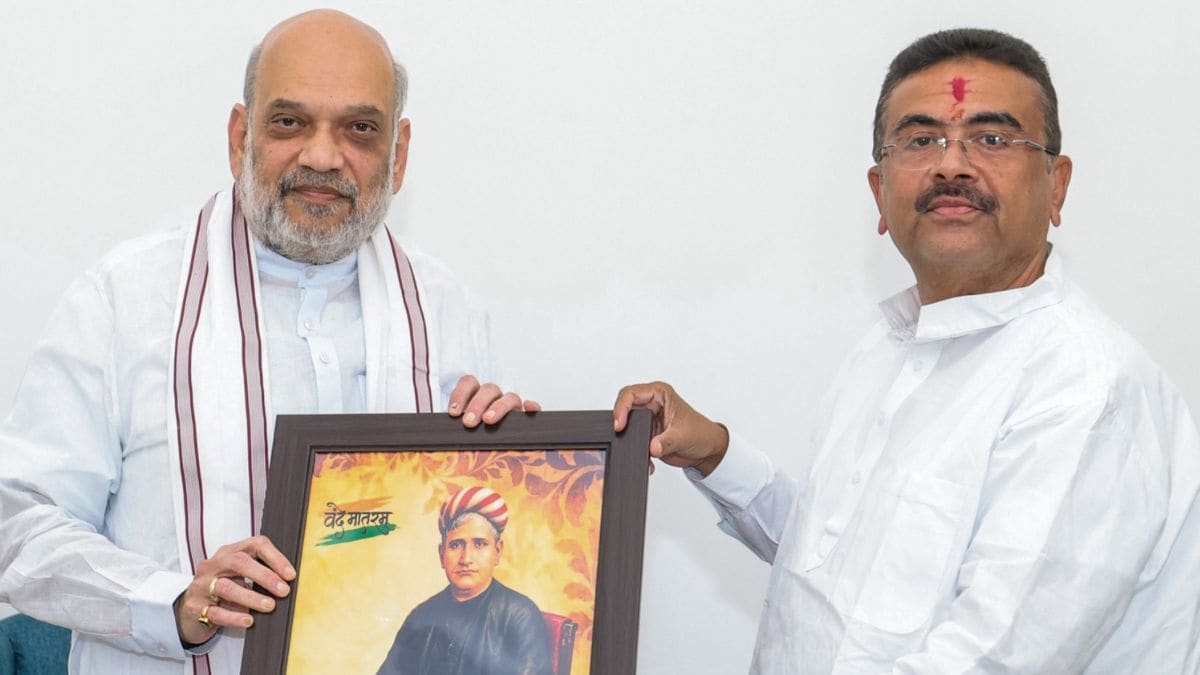
New Bengal Chief Minister Suvendu Adhikari with Home Minister Amit Shah.
Rebellion In Trinamool?
After its debacle in the elections, the Trinamool Congress appears to be heading toward a split. There is discussion in the political circles of Delhi and Kolkata that many Rajya Sabha MPs of Trinamool Congress are ready to join the BJP.
The party has 29 MPs in the Lok Sabha and 10 in the Upper House of Parliament. 8 out of 10 of these MPs may defect to the BJP, following the script of the recent Aam Aadmi Party split, wherein 7 AAP Rajya Sabha MPs joined the ruling party.
Also read: "Will Rebuild Party, Paint Offices If Needed": Mamata Banerjee After Poll Rout
The possibility of implosion in the Trinamool Congress also exists. Many TMC MLAs and leaders have skipped the party's meeting. Dissatisfaction is simmering, as many of the leaders are questioning Banerjee's leadership after she lost the poll in her stronghold, Bhabanipur. Ironically, she lost the elections to Suvendu Adhikari, a Trinamool turncoat who spearheaded the BJP since 2020 with his aggressive Hindutva pitch and anti-infiltration push.
There is a sense of fear of reprisals among Trinamool leaders as well, as many think that the BJP government might take penal actions against them.
Mamata Banerjee is facing the monumental challenge of drowning out dissenting voices and keeping the party united. In the meantime, the BJP might wait and watch.
After a protracted and intense political battle with the Trinamool Congress, the BJP finally prevailed, as it won 207 of the state's 294 seats. The Trinamool was reduced to just 80 seats. Adhikari became the chief minister.
from NDTV News- Special https://ift.tt/xlRkI2O
via IFTTT
Friday, May 22, 2026
Want To Apply For Green Card? Return Home First: New US Immigration Rules
The US government has issued a new policy meme that fundamentally changes how foreign nationals on temporary visas can apply for permanent residency or a Green Card. Under the new rules, most people must return to their home country to apply, rather than doing so from within the United States.
Now, this changes quite a few things. Previously, many foreign nationals already living in the US on student, tourist or work visas could apply for a Green Card without leaving. This process, known as Adjustment of Status, was widely used and broadly available.
The new policy, issued by US Citizenship and Immigration Services (USCIS), reclassifies AOS as an "extraordinary form of relief", meaning it will only be approved in limited, exceptional cases.
An alien who is in the U.S. temporarily and wants a Green Card must return to their home country to apply.
— Homeland Security (@DHSgov) May 22, 2026
This policy allows our immigration system to function as the law intended instead of incentivizing loopholes.
The era of abusing our nation's immigration system is over. https://t.co/ofyEYGPDLC
The policy affects anyone in the US on a temporary, non-immigrant visa who was planning to apply for a Green Card, including students, tourists, and temporary workers.
"US Citizenship and Immigration Services today announced a new policy memo reiterating the fact that, consistent with long-standing immigration law and immigration court decisions, aliens seeking adjustment of status must do so through consular processing via the Department of State outside of the country. Officers are directed to consider all relevant factors and information on a case-by-case basis when determining whether an alien warrants this extraordinary form of relief," the release said.
New Rules To Reduce Those Who Stay "Illegally"
USCIS spokesperson Zach Kahler said that the policy restores the "original intent of the law" and said that temporary workers are expected to leave the US after their authorised stay ends.
"We're returning to the original intent of the law to ensure aliens navigate our nation's immigration system properly. From now on, an alien who is in the US temporarily and wants a Green Card must return to their home country to apply, except in extraordinary circumstances. This policy allows our immigration system to function as the law intended instead of incentivising loopholes," he said.
Kahler said that this practice will reduce the need to find and remove those who "slip into the shadows" and stay in the United States "illegally" after being denied residency.
He also said that the process would keep the burden on USCIS and allow the agency to focus on other immigration priorities, including humanitarian cases and naturalisation applications.
Kahler added that routing most cases through US consulates abroad allows USCIS to focus its limited resources on other priorities, including visa applications for victims of violent crime and human trafficking, as well as naturalisation cases.
(With inputs from agencies)
from NDTV News- Special https://ift.tt/P1dFahs
via IFTTT
Ganguly Turns Back The Clock, Slams Century In Viral Video. Internet Reacts
Former Indian cricket team batter Sourav Ganguly rolled back the years as he played some beautiful shots to score 132 runs off just 68 balls in a viral gully cricket clip. Ganguly, who was well known for his elegant off-side shots, showed off his batting prowess and even slammed few trademark sixes straight down the group during the informal match. Internet was left stunned as the 53-year-old looked completely at ease and social media users were all praise for his batting. Ganguly scored 131 in his debut Test match against England and during this knock, he decided to score 1 more.
During the video, Ganguly was given two 'lives' which meant he could afford to get dismissed once. He reached his half-century in 33 balls and ended up losing his first 'life' at 75. However, there was no stopping as he raced to the century in 58 deliveries.
Following his century, the wicket-keeper urged Ganguly to recreate his iconic Lord's celebration. However, he remained in high sprits and ended his knock on 132.
Earlier, during his appearance on Raj Shamani's podcast, Ganguly said that he had no idea Indian players were approached to do 'match-fixing'.
He spoke to Sachin Tendulkar and Rahul Dravid, asking them if any of them had been approached by someone to do such a thing.
"The issues that the Indian team faced just before I became captain - betting, match-fixing - I didn't even know about these things. I kept asking Sachin [Tendulkar] and Rahul [Dravid] 'Does it actually happen? Has anyone approached you?' Because no one had approached me. So, I spoke to Sachin, 'Tujhe kisi ne poocha?' He said no. We all used to play both formats - Tests and one-dayers. Asked Anil [Kumble] too, he said 'No. Nobody asked me'. So, I wasn't too sure what it even was. That [captaincy] was the job in hand. So, I didn't have these things in mind," Ganguly opened up on the Raj Shamani podcast.
from NDTV News- Special https://ift.tt/H62KReS
via IFTTT
Thursday, May 21, 2026
Twisha Sharma's Mother-In-Law Goes To Court, Says Clips, Chats Fabricated
Giribala Singh -- former judge and mother-in-law of Twisha Sharma -- has gone to court, claiming that an audio clip and WhatsApp chats that are being widely reported on by the media is fabricated. She has sought that the court ensure that the "original source" of these audio clips and WhatsApp chats be investigated. She also alleged that proper procedure was not followed during the seizure of the Digital Video Recorders or DVRs of the CCTV cameras. The court has been requested to re-examine the DVR and to conduct a fresh verification of the sealed recordings.
The audio clip - purportedly a conversation between Giribala Singh and Twisha's brother Major Harshit Sharma - became highly controversial, with questions apparently being raised in it about Twisha's relationships and private life. Reports said there were questions on whether Twisha had entered relationships with men for "personal gain". One line from the recording reportedly said, "Some people earn by selling their intellect, others earn by selling their bodies".
Read: 'Unfathomable Cruelty': Twisha Sharma's Brother On Her Mother-In-Law
Giribala Singh has also sought that the cellphones belonging to Twisha Sharma's family -- her father Navinidhi Sharma, mother Rekha Sharma, brother Harshit Sharma, and sister-in-law Rashi Sharma -- be seized and sent for forensic investigation.
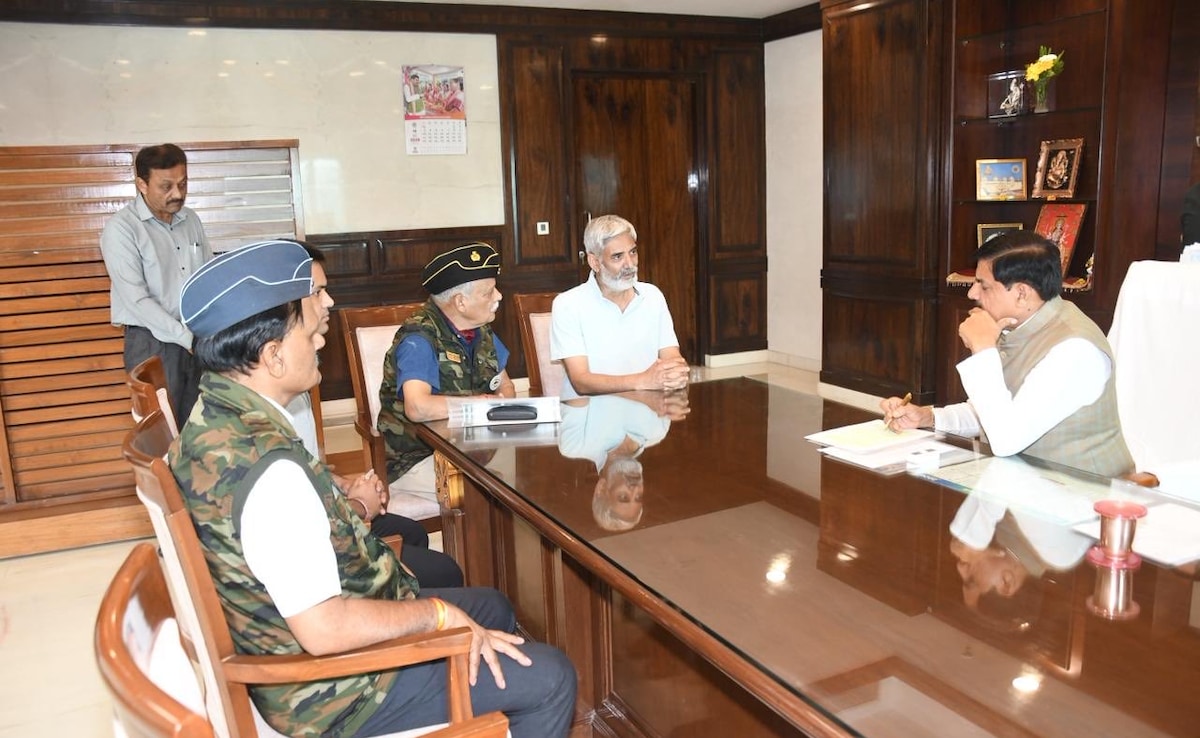
Twisha Sharma's family has met Chief Minister Mohan Yadav to seek justice.
The petition asserted that the facts of the case could be detected if a thorough examination be made of mobile data, chat logs, and digital records. She has requested the court to order that the electronic evidence be preserved and investigated.
The application -- filed in a court in Bhopal Court today - also alleged that the DVR for the eight CCTV cameras installed in the house was not seized in accordance with proper legal procedure. The DVR displayed a time and date approximately 2 days, 2 hours, and 20 minutes prior to the actual time of the incident, she has claimed. Singh has sought that the CCTV footage be viewed again in presence of the "panchas" (witnesses) and the applicant, the individuals visible in the footage be identified.
Read: Age, Height Mismatch: The Unanswered Questions In Twisha Sharma Case
Twisha Sharma, 33, a model and an actor, died under suspicious circumstances within months of her wedding to Giribala Singh's son. While the police claim she died by suicide, her family members alleged she was murdered by her in-laws and have demanded a second postmortem examination.
Her husband Samarth Singh, a lawyer, is on the run. His mother has accused Twisha of being a drug addict who had a mental disorder. The police have said they had found no evidence of drug abuse in the post-mortem report.
from NDTV News- Special https://ift.tt/OSQxtKT
via IFTTT
RIL, others refute govt's claim on KG Basin
New Delhi: Reliance Industries Ltd (RIL) on Thursday strongly refuted in the Supreme Court the Centre's claim that the company and its two offshore partner firms allegedly siphoned from the Krishna-Godavari basin deposits gas which migrated to their area from the state-owned ONGC gas field.A bench of Chief Justice Surya Kant and Justices Joymalya Bagchi and Vipul M Pancholi was hearing the appeals of RIL, BP Exploration (Alpha) Ltd and Niko (NECO) Ltd against a Delhi High Court verdict that set aside an arbitral award in their favour in the gas migration dispute with the Centre.The firms assailed the February 14, 2025 order of the high court setting aside an order of the single-judge bench that had upheld the arbitral award in favour of RIL and its two partners for allegedly siphoning gas from deposits they had no right to exploit.The oil ministry on November 4, 2016, slapped a demand of USD 1.47 billion on the Reliance-BP-Niko combine for producing in seven years ending March 31, 2016 about 338.332 million British thermal units of gas that had seeped or migrated from ONGC's blocks into their adjoining KG-D6 in the Bay of Bengal.Senior advocate Abhishek Singhvi, appearing for RIL, said it was alleged that the firms "unjustly" extracted or rather "stolen" the gas which migrated to their area from the ONGC gas field."The gas migrated may be because of pressure difference between two places," the senior lawyer said, asking how they can be accused of stealing gas when ONGC was sleeping over for many years and did not extract from its area."The ONGC (Oil and Natural Gas Corporation) was sleeping over for 10 years while operationalising the gas extraction," Singhvi said, and asked as to how the RIL and partners can be accused of causing migration of gas.The bench said the point was well taken as gas migration cannot be caused intentionally and it could be incidental.The senior lawyer said that even if it is assumed that RIL and others took away the ONGC gas, then how it can be quantified.Senior advocate Kapil Sibal, appearing for one of the foreign firms, echoed the same arguments and said if the situation is reversed and "let us assume that ONGC had operationalised the gas extraction and RIL and others did not...then, can the government act the way it did and ask ONGC to compensate us".He also said that the "whole allegation of gas theft was very wrong".Sibal said the government had allowed 100 per cent FDI in certain fields to spur economic growth and such an approach would "slow down the economic growth".He said that the confidence of foreign investors that arbitral awards will not be interfered with so easily should be maintained.Singhvi assailed the Delhi High Court division bench judgment setting aside an arbitral award in RIL's favour and said it impermissibly imported constitutional doctrines into a contractual arbitration dispute.He said the high court wrongly invoked Article 297 of the Constitution and the public trust doctrine to overturn concurrent findings of the arbitral tribunal and the single judge, despite neither principle prohibiting the extraction of migrated gas under the production sharing contract (PSC).He said the Centre's policy framework itself was designed to maximise exploitation of natural resources without public investment, with the contractor bearing both capital risk and operational cost."The policy is a very good policy of the Government of India to exploit our natural resources to the full without investing money and risk. Risk is mine, money is mine," he said.He said that while ownership of offshore natural resources under Article 297 indisputably vests in the Union, the constitutional provision could not be used abstractly to invalidate contractual arrangements made under that very framework.Defending the arbitral award, he said the tribunal had correctly held that the PSC permitted extraction of gas that had naturally migrated into Reliance's contract area, as the contractor was operating strictly within its licensed geographical limits and had not undertaken any deliberate extraction from ONGC's adjoining block.Using the analogy of fugitive minerals, he said that natural gas, unlike static minerals such as coal, migrates due to pressure differences and does not respect artificial contractual boundaries.The hearing will resume on Friday.On Wednesday, the bench declined a submission by RIL to put the hearing in the case on hold for the time being as the company and two other foreign firms sought mediation or conciliation with the Centre for an amicable resolution.In July 2018, an international arbitration tribunal rejected the Centre's claim of USD 1.55 billion against RIL and its partners for allegedly siphoning gas from deposits they had no right to exploit. The three-member arbitral panel by a majority of 2-1 had also awarded USD 8.3 million compensation to the three partners, Reliance had said in a regulatory filing.Earlier, a division bench of the high court had allowed the appeal of the central government challenging the May 9, 2023 judgment of a single judge that was passed in favour of the Mukesh Ambani-promoted RIL.The single judge, while upholding the arbitral award, had said the court was not persuaded to hold that the conclusions drawn by the arbitral tribunal were such that no reasonable person would reach.
from Economic Times https://ift.tt/1aJOyHL
via IFTTT
from Economic Times https://ift.tt/1aJOyHL
via IFTTT
Wednesday, May 20, 2026
India power demand hits record 265.4 GW
New Delhi: India's peak power demand continues to scale fresh highs, touching a record 265.4 GW on Wednesday as heatwave conditions and high temperatures persisted across large parts of the country.The latest peak surpassed Tuesday's all-time high of 260.5 GW recorded during solar hours. The latest demand levels have already crossed last summer's record peak of 243 GW, and even those recorded during the evening. The peak demand recorded is inching closer to the projected 271 GW for the season.Most of the peak consumption was met by thermal power contributing 61.2%, solar energy came next with 21.5%, wind and hydro contributed over 6% each, while nuclear contributed 2.6%, among contributions from other sources, an industry official said.According to a person familiar with the matter, the power ministry has prepared and ensured available capacity to meet peak demand of up to 280 GW.A power ministry statement issued after Monday's peak demand touched 257.37 GW said the country has adequate electricity availability.
from Economic Times https://ift.tt/Ch2dUoF
via IFTTT
from Economic Times https://ift.tt/Ch2dUoF
via IFTTT
Indian-Origin Microsoft Veteran Dies At 59, Silicon Valley In Shock
S "Soma" Somasegar, a highly influential Indian-origin technology executive, Microsoft veteran, and venture capitalist died on May 19 at the age of 59. His death was confirmed by Seattle-based venture capital firm Madrona Venture Group, where he had served as managing director for the past 11 years. The firm said he consistently raised expectations professionally and personally through his work as a technologist, executive, and investor.
"We are heartbroken to share that our dear friend and colleague Soma Somasegar passed away unexpectedly earlier today. There is no way to adequately describe Soma's brilliance and generous spirit. He was unique at every level and raised the bar on what we expected of ourselves professionally and, more importantly, personally. We all loved Soma, as everyone who knew him did," the tribute read.
Born in Puducherry, Somasegar built a distinguished global career that spanned nearly three decades at Microsoft before moving into venture capital. Widely respected across Silicon Valley, he was known not only for his technical leadership but also for mentoring a generation of entrepreneurs and technology executives.
Somasegar joined Microsoft in 1989 and went on to contribute to eight releases of Windows, including work on the foundational 32-bit operating system Windows NT. He later rose to become Corporate Vice President of Microsoft's Developer Division, where he oversaw key platforms including Visual Studio and the .NET framework. He also played a major role in Microsoft's transition toward open-source server runtimes and cloud-based developer ecosystems.
Beyond product development, Somasegar helped expand Microsoft's global research and development footprint outside the United States, supporting the growth of technology hubs in Hyderabad, China, Israel, and Boston. After leaving Microsoft in 2015, he joined Madrona Venture Group as managing director, focusing on investments in artificial intelligence, machine learning, intelligent applications, and cloud infrastructure. He was also an active angel and seed investor in startups across the US and internationally. Hours before news of his death emerged, Somasegar had been named to the “SEED 100” list recognising the top early-stage investors of 2026.
Tributes Pour Across Social Media
Tributes poured in from across the technology industry following news of his unexpected death. Donald Trump's AI advisor Sriram Krishnan, who was hired by Somasegar early in his career alongside his wife Aarthi Ramamurthy, shared an emotional message on X, describing him as a defining influence on their professional journey.
"It's hard to articulate how much of an impact Soma had on @aarthir and me. He spotted us out of under grad, made sure we got our first jobs, spent time with us though he was a senior executive at Microsoft and we were random junior people and showered us with kindness. Over the years he became a mentor who would tell us how proud he was of where we had gotten. We genuinely wouldn't have the lives and careers we have now without him. I'm still in shock and so deeply heartbroken. It's a truly sad day," he wrote on X.
S “Soma” Somasegar
— Sriram Krishnan (@sriramk) May 20, 2026
It's hard to articulate how much of an impact Soma had on @aarthir and me. He spotted us out of under grad, made sure we got our first jobs, spent time with us though he was a senior executive at Microsoft and we were random junior people and showered us with… pic.twitter.com/sa9HLDjym0
Several former Microsoft colleagues also mourned his death, remembering him as a generous mentor, visionary leader, and one of the most respected figures in the developer ecosystem.
Just heartbreaking news that "Soma" S. Somasegar has passed away aged 59.
— Rob Tiffany (@RobTiffany) May 20, 2026
His contributions to Microsoft spanned from OS/2 to Windows NT to running DevDiv where he delivered Visual Studio, .NET, and Mobile development tools that so many of us relied on.
After Microsoft, he… pic.twitter.com/ShoFrTEq0B
Soma taught me the software shipping triangle in 2005. I have used it in founder conversations ever since. Remembering S. Somasegar, 1966–2026. #somasegar https://t.co/LjWSf0a5cL
— The Founder Catalyst (@venkatarangan) May 20, 2026
RIP #SomaSegar (S. “Soma” Somasegar, 1966–2026).
— Chinnu Senthilkumar (@chinnusenthil1) May 20, 2026
My deepest condolences to his family.
Soma was from my alma mater, College of Engineering Guindy, and I had the privilege of staying in touch with him on and off—especially after he became a VC.
At #Microsoft, he played a key…
Folks, this is just such terrible news.
— Dona Sarkar (@donasarkar) May 20, 2026
Soma was an incredible mentor and sponsor to so many of us, across both Microsoft and Madrona.
It's shocking.https://t.co/qQTRSJhLVT
Somasegar earned a master's degree in Computer Engineering from Louisiana State University and a bachelor's degree in Electronics and Communication Engineering from Anna University. Anna University later conferred upon him an honorary doctorate for his contributions to technology and computer science. In 2008, he received the Asian American Engineer of the year award.
He is survived by his wife, Akila, and their two daughters.
from NDTV News- Special https://ift.tt/jQOkudr
via IFTTT
Rhea Chakraborty Announces Social Media Break: 'I Miss Simply Being'
Actor Rhea Chakraborty said she has been missing herself as she announced a break from social media to "reconnect with what feels real".
Chakraborty shared a post on her Instagram handle on Tuesday and said online noise feels heavy.
"Lately, I've been missing myself a little. The constant noise, the scrolling, the keeping up - it's all started to feel heavier than I expected. I miss being present without thinking about capturing the moment. I miss quiet. I miss simply being," she wrote.
"So, I'm taking a step back for a while - to slow down, breathe a little deeper, and reconnect with what feels real. Choosing lived moments over posted ones, for now. See you soon," she added.
Chakraborty will next feature in the Netflix series Family Business, which will also mark her return to the screen after a seven-year hiatus. The series also features Anil Kapoor and Vijay Varma in pivotal roles.
(Except for the headline, this story has not been edited by NDTV staff and is published from a syndicated feed.)
from NDTV News- Special https://ift.tt/VYUzWkv
via IFTTT
Tuesday, May 19, 2026
Video Shows US Cargo Jet Engine Tearing Off Before Crash That Killed 15
The US National Transportation Safety Board (NTSB) has released chilling surveillance footage showing the exact moment a UPS cargo aircraft suffered a catastrophic mid-takeoff failure before crashing near Louisville, Kentucky. The newly released video captures the left engine and its supporting pylon tearing away from the wing of the McDonnell Douglas MD-11F operating UPS Flight 2976 just seconds after the aircraft lifted off from Louisville Muhammad Ali International Airport on November 4, 2025.
The cargo jet, operated by UPS Airlines, was headed to Honolulu when disaster struck moments after rotation. Investigators said the engine detached violently, erupting into a fireball as debris scattered across the airport perimeter and nearby industrial areas. Notably, the crash was the deadliest in history for the global logistics company.
Here's the video:
WATCH: Newly released airport surveillance footage of UPS Flight 2976 shows the exact moment the MD-11F's left engine and pylon separated from the wing just seconds after liftoff from Louisville back on Nov. 4, 2025. pic.twitter.com/Ol05yqH45K
— Turbine Traveller (@Turbinetraveler) May 19, 2026
According to the NTSB's preliminary findings, the aircraft never gained significant altitude after takeoff. Flight recorder data showed the plane climbed to only around 30 feet before losing control. The aircraft eventually crashed into industrial buildings near the airport, leaving behind a debris trail stretching nearly half a mile.
The crash killed all three crew members onboard and at least 12 people on the ground, while more than 20 others suffered injuries, as per the New York Post. Authorities described the scene as a massive post-impact fire involving aviation fuel and nearby industrial facilities.
Investigators now believe fatigue cracks in a critical engine support structure played a central role in the disaster. The NTSB said examinations uncovered cracks in the left engine pylon's aft mount lug - a key structural component connecting the engine assembly to the wing. Over time, repeated stress appears to have weakened the metal until it finally failed during takeoff.
US media reports say investigators are also examining whether warning signs were missed during inspections and maintenance checks. Reuters reported that Boeing had identified similar failures in previous aircraft years earlier, and federal investigators are now scrutinising why broader corrective measures were not introduced sooner.
The aircraft involved in the crash was a 34-year-old MD-11 freighter originally developed by McDonnell Douglas before its merger with Boeing. Following the accident, the US Federal Aviation Administration temporarily grounded MD-11 and related DC-10 aircraft models while emergency inspections were carried out across fleets, CNN reported.
The NTSB has opened formal hearings into the crash, with investigators focusing on aircraft design standards, inspection procedures, and whether regulators and manufacturers acted adequately on earlier reports of fatigue-related failures. A final report determining the probable cause of the crash is expected next year.
from NDTV News- Special https://ift.tt/cMJCtZY
via IFTTT